Divya Toshniwal

Practical Psychology, Relationships & Personal Growth

Menu
  • Home
  • Blogs
  • Podcasts
  • Books
  • Web Stories
  • Connect
Menu

Category: Self Help

Adulting is Hard, Micro-Retirements are Your Sassiest Escape Hatch

Posted on August 19, 2025August 19, 2025 by Divya Toshniwal


Mira, a 23-year-old graphic designer, was living the “dream.” A sleek apartment in the city, a job at a cool startup, and a constant stream of new projects. But behind the perfectly curated Instagram grid was a growing sense of dread. The late nights fueled by cold brew, the endless feedback loops, and the pressure to always be “on” were turning her creativity into a chore. She felt a constant, low-grade hum of anxiety, a feeling of being perpetually depleted. One day, while mindlessly scrolling, she saw a post about a friend who was taking a month-long trip to Bali. It wasn’t a sabbatical; it was a “micro-retirement.” A lightbulb went off. What if she didn’t have to wait for a distant, mythical retirement to feel alive again? What if she could just… take a break?


That’s the idea behind the micro-retirement. It’s a psychological lifeline for a generation that’s been told to hustle relentlessly. This isn’t just about a vacation; it’s a deliberate and strategic break from the demands of work to prevent burnout, a state of chronic workplace stress that leads to physical and emotional exhaustion, cynicism, and a reduced sense of accomplishment.


The Psychological Viewpoint: Why Micro-Retirements are a Mental Health Hack


From a psychological perspective, the micro-retirement is a brilliant form of proactive self-care. Our brains aren’t designed for sustained, high-intensity work without periods of rest. The constant barrage of deadlines, notifications, and performance metrics puts our nervous system in a state of perpetual stress. This chronic stress can lead to a cascade of negative effects, including anxiety, depression, cognitive impairment, and a weakened immune system.


Psychologists have long advocated for the importance of psychological detachment from work. This means mentally disengaging from job-related tasks and thoughts during non-work hours. While a weekend can offer some detachment, it’s often not enough to fully recharge a depleted mind.

A micro-retirement, however, provides a more complete and extended period of detachment. This allows the prefrontal cortex, the part of the brain responsible for complex thinking and decision-making, to rest and recover. It also helps to break the cycle of rumination—the repetitive thinking about negative thoughts and problems—that often fuels anxiety and stress.


Gen Z: Masters of the Mini-Escape


Gen Z is a generation uniquely attuned to the psychological toll of the modern workplace. They’ve grown up with constant connectivity, a pressure to perform, and a front-row seat to the burnout experienced by older generations. They’re not just looking for a break; they’re actively seeking to reclaim their sense of agency and identity outside of their professional lives.


For them, a micro-retirement is a way to combat the “identity foreclosure” that can happen when your entire sense of self is tied to your career. It allows them to explore hobbies, travel, volunteer, and reconnect with their values. This intentional time away helps to build psychological resilience—the ability to bounce back from adversity—by reminding them that their worth is not solely defined by their productivity.

How Gen Z is Rocking the Micro-Retirement:

  • ​Strategic Saving: They’re not just saving for some distant future; they’re actively budgeting and strategizing for these shorter, more frequent breaks. Think aggressive saving periods followed by intentional “escape funds.”
  • ​Skill-Based Breaks: Many are using micro-retirements to pursue passions, learn new skills, or even volunteer. It’s not just about lounging on a beach (though that’s definitely part of the appeal); it’s about personal growth and exploration. Imagine taking a coding bootcamp for three months, or volunteering at an animal shelter in another country.
  • ​Freelancing & Gig Economy Flexibility: The rise of remote work and the gig economy makes micro-retirements more feasible than ever. Gen Z is leveraging this flexibility to weave in periods of dedicated work followed by intentional time off.
  • ​Prioritizing Mental Health: Let’s be honest, the pressure to constantly hustle can take a serious toll. Micro-retirements offer a proactive way to address burnout before it becomes a full-blown crisis. It’s about recognizing the need to step back, recharge, and come back stronger and more focused.
  • ​Experiences Over Everything (Almost): While financial security is still a goal, Gen Z places a high value on experiences. Micro-retirements offer opportunities to travel, explore hobbies, and create memories that a traditional work structure might not allow for until much later in life.


The Practical Psychology of the Micro-Retirement


Boundary Setting: Planning a micro-retirement forces individuals to set firm boundaries with their employers and themselves. This act of saying “no” and prioritizing one’s well-being is a powerful psychological tool.


Novelty and Dopamine: Taking a break to travel or learn a new skill provides the brain with a fresh dose of novelty. This stimulates the release of dopamine, a neurotransmitter associated with pleasure and motivation, which can help to combat feelings of boredom and apathy.


Renewed Perspective: Stepping away from the day-to-day grind allows for a new perspective on one’s career and goals. It can lead to moments of insight and a renewed sense of purpose, often resulting in increased creativity and productivity upon return.


By embracing the micro-retirement, Gen Z is not just avoiding burnout; they’re actively cultivating a healthier, more sustainable relationship with work. They’re proving that the best way to thrive is not to grind relentlessly but to pause, recharge, and live a little.

mimetic desires

Mimetic Desire: Do you really want what you think you want?

Posted on December 19, 2024September 14, 2026 by Divya Toshniwal

When I met Ryan, he seemed to have it all—effortless charisma, an unshakable sense of purpose, and a life that seemed to unfold like the pages of a magazine. We’d been college roommates, and while I spent late nights juggling assignments and a part-time job, Ryan coasted through, juggling social engagements, leadership roles, and still managing to ace his exams. Everyone admired him, and though I tried not to compare myself, it was impossible not to feel like I was falling short.

It wasn’t jealousy—at least, that’s what I told myself. Ryan was my friend, after all, and I wanted to see him succeed. But the more I saw his effortless success, the more I began to wonder: why couldn’t I have what he had? I started mirroring his choices without even realizing it. When Ryan joined the debate team, I signed up too, despite knowing I hated public speaking. When he took up photography, I spent an entire paycheck on a DSLR camera I barely knew how to use. I told myself I was expanding my horizons, but deep down, I knew I was chasing his shadow.

Ryan’s success escalated after college. He landed a high-paying consulting job, moved to a sleek downtown apartment, and started posting photos of luxurious trips and designer suits. Meanwhile, I floundered in a series of unfulfilling entry-level jobs. Every time I scrolled through his social media, I felt a gnawing inadequacy. I told myself I wasn’t envious, just inspired. But the truth was harder to admit: I wanted what Ryan had, not because it was what I truly desired, but because he made it look so desirable.

This mimetic pull began to distort my choices. I applied to the same consulting firms, convinced that if I could replicate his career trajectory, I’d finally feel fulfilled. I even started dressing like him, adopting his polished aesthetic in the hopes it might bring me closer to his level of success. But no matter how much I tried to mimic his life, I couldn’t shake the emptiness that followed. The suits felt like a costume, the job interviews felt hollow, and my growing resentment toward Ryan became a wedge in our friendship.

The breaking point came at one of Ryan’s rooftop parties. Surrounded by his glamorous friends, I tried to fit in, laughing at jokes I didn’t find funny and sipping cocktails I couldn’t afford. Midway through the evening, Ryan pulled me aside.

“You don’t seem like yourself lately,” he said.

His words stung because they were true. I had lost sight of who I was in the pursuit of who I thought I should be. That night, I left the party early, walking aimlessly through the city, questioning every choice I’d made in the past few years. I realized that I had been living someone else’s life, chasing desires that weren’t truly mine.

The next morning, I made a list of everything that genuinely brought me joy—things I had neglected in my quest to emulate Ryan. Writing, hiking, cooking—simple activities that had nothing to do with status or validation. Slowly, I began to rebuild my life around these authentic passions. I started journaling daily, eventually sharing my writing on a blog that gained a small but supportive following. I spent weekends exploring trails instead of attending networking events, and I found solace in creating meals that reminded me of home.

Ryan and I drifted apart, not out of animosity, but because I no longer needed his life as a blueprint for my own. The distance allowed me to see him more clearly—not as a rival or a model to emulate, but as a person with his own struggles and insecurities. Over time, I came to understand that Ryan’s success had never been the problem; my unexamined desire to measure myself against him was.

Looking back, I’m grateful for the detour, painful as it was. It taught me that mimetic desires—the drive to want what others have—can be a powerful force, but only if we let it. By recognizing and resisting this pull, I found the courage to define success on my own terms. True fulfillment, I realized, doesn’t come from chasing someone else’s dream. It comes from the quiet satisfaction of living a life that’s unmistakably yours.

Mimetic desire, a concept first articulated by French philosopher René Girard, is a fascinating theory that explains how human desires are often shaped not by inherent needs or personal inclinations, but by the desires of others. It underscores a fundamental aspect of human behavior: we are not isolated individuals with unique wants; instead, we are deeply influenced by the people around us, whether we realize it or not. This phenomenon of desire through imitation is not just an intriguing philosophical idea but a powerful lens for understanding much of human culture, from consumer behavior to social conflicts.

What is Mimetic Desire?

You might not have cared about the latest smartphone, but when you see your friends or influencers raving about it, you suddenly feel like you need it. Their desire influences yours.Ever noticed how people are drawn to crowded restaurants? Even if you had no prior opinion about the food, seeing a packed venue makes you think the food must be amazing, and you want to try it too.When a song or dance becomes popular on TikTok, people often mimic the trend. It’s not just about liking the song but about wanting to participate in something others are enjoying.

At its core, mimetic desire suggests that we desire things not because they are inherently valuable, but because others desire them. Girard’s theory rests on the idea that people’s desires are not autonomous. Instead, they are modeled after others’ desires. This imitative process begins early in life, as children look to their parents, peers, or even media figures for guidance on what is worth wanting. Think about kids playing together. If one child picks up a toy, suddenly all the other kids want that exact toy—even if it was ignored before. They desire it because someone else does. As individuals, we often look to others to define what is desirable, whether that is a material object, a lifestyle, a status, or even a particular romantic partner.Sometimes, someone may seem more attractive because others are interested in them. This is mimetic desire in relationships—desiring someone because they are seen as desirable by others.

A person may find themselves wanting a certain brand of luxury car or an extravagant vacation not because they independently see it as valuable, but because others in their social circle admire or covet these things. The desire to possess what someone else possesses creates a cycle of imitation and competition, which can amplify the intensity of the desire.

Mimetic Desire and Conflict

Since desires are imitative, they often overlap, causing competition between individuals or groups. The more people desire the same thing, the more intense and entrenched the competition becomes. This is especially true for scarce resources—whether tangible goods, status, or even affection.

These conflicts can be internal (within oneself) or external (with others). Here’s how:


1. Internal Conflicts

Mimetic desire can create inner turmoil when it clashes with personal values, needs, or self-perception.

  • Example 1: Identity Crisis
    • You might start wanting a high-paying corporate job because your peers desire it, even if deep down, you value creative freedom or a simpler lifestyle. This leads to frustration, dissatisfaction, and self-doubt.
  • Example 2: Imposter Syndrome
    • Mimicking the goals or achievements of others might leave you feeling like a fraud because you’re chasing what’s not authentically yours.
  • Example 3: Conflicted Choices
    • A person might feel torn between buying a luxury car because “everyone” has one and their desire to save for something meaningful, like traveling or education.

2. External Conflicts

Mimetic desires often create competition when multiple people want the same thing, leading to rivalry, jealousy, or disputes.

  • Example 1: Workplace Rivalry
    • Two employees might compete for a promotion not because either deeply wants the role, but because the other person does. This rivalry can breed animosity and sabotage.
  • Example 2: Love Triangles
    • In relationships, mimetic desire can manifest when two friends fall for the same person. One friend’s interest might spark the other’s, leading to conflict and strained friendships.
  • Example 3: Social Tensions
    • Mimetic desire fuels consumerism. For instance, everyone wanting the latest trendy gadget might lead to price hikes, scarcity, and frustration. On a larger scale, it can cause class envy or resentment when some cannot afford what others flaunt.

Why Mimetic Desire Escalates Conflict

Self-Perpetuating Cycle: Mimetic desire spreads. If two people compete for something, others might join in, assuming it must be valuable, escalating the conflict further.

Girard argued that this kind of rivalry inevitably leads to social tensions and conflicts. Over time, these conflicts can escalate, often resulting in a scapegoating mechanism where one individual or group is blamed for the group’s frustrations. This process, according to Girard, is fundamental to human culture and has influenced everything from the formation of myths to the dynamics of war and violence.

Mimetic Desire in Modern Society


In today’s world, mimetic desire is especially prevalent. The advent of social media has amplified the influence of mimetic desire, allowing us to see and compare the lives of others in ways that were once unimaginable. People constantly present curated versions of their lives on platforms like Instagram, Facebook, and TikTok, showcasing material possessions, relationships, and experiences that others may come to desire. The more someone’s lifestyle is idealized by others, the more those desires are mimetically spread, creating trends, fads, and even consumer addictions.

In the realm of consumerism, mimetic desire has been a key driver behind the marketing strategies of corporations. Advertisements are designed not simply to sell products but to suggest that owning these products will make us more desirable, successful, or fulfilled—goals that are often defined by what others have or want. This results in a cycle where people are motivated to acquire things they may not even need, simply to imitate the desires of those around them.

Why we need to understand mimetic desires?

Understanding mimetic desire is essential because it deeply influences human behavior, relationships, and society. By recognizing how mimetic desire works, we can make more authentic decisions, navigate social dynamics effectively, and reduce unnecessary conflicts. Here are some key reasons why understanding it is valuable:


1. To Make Authentic Choices

  • Mimetic desire often leads us to pursue goals and possessions because others want them, not because they align with our true values or needs. By understanding this, we can:
    • Reflect on whether a desire is genuinely ours.
    • Focus on what brings real fulfillment, rather than chasing trends or societal pressures.
  • Example: You might decide against buying an expensive gadget or pursuing a high-status career if it doesn’t align with your personal aspirations.

2. To Reduce Competition and Conflict

  • Mimetic desire is a root cause of rivalry and jealousy, as people often compete for the same objects, roles, or relationships. Recognizing its influence can:
    • Help diffuse tension by identifying the underlying imitation.
    • Encourage collaboration instead of competition.
  • Example: Two colleagues might recognize they’re competing for a promotion only because they’re mimicking each other’s ambition, leading to healthier workplace dynamics.

3. To Build Stronger Relationships

  • Mimetic desire can strain friendships, romantic relationships, and family dynamics. Understanding it helps:
    • Prevent unnecessary comparisons or rivalries.
    • Foster mutual understanding and support.
  • Example: Recognizing how mimetic desire impacts a love triangle can help friends preserve their relationship by addressing the root of the conflict.

4. To Resist Consumerism and Social Pressures

  • Advertisers and social media platforms often exploit mimetic desire to drive consumption. Understanding this helps:
    • Avoid falling for marketing tactics that manipulate desires.
    • Make mindful financial and lifestyle decisions.
  • Example: You might realize that buying a luxury car won’t make you happier, even if it seems desirable because others have one.

5. To Enhance Creativity and Innovation

  • Mimetic desire can stifle originality because people tend to imitate popular ideas or trends. Recognizing this can:
    • Encourage you to think independently and explore unique perspectives.
    • Drive innovation by focusing on what genuinely inspires you, rather than what’s fashionable.
  • Example: Instead of mimicking a popular style in art or writing, you create something that reflects your personal vision.

6. To Understand Social and Cultural Dynamics

  • Mimetic desire plays a role in shaping societal trends, movements, and even conflicts. By studying it, we can:
    • Analyze how collective desires are formed and spread.
    • Address societal issues like polarization, inequality, and consumerism.
  • Example: Recognizing how mimetic desire drives housing booms or social media trends can help policymakers and individuals make informed decisions.

7. To Cultivate Emotional Resilience

  • Mimetic desire often triggers envy, insecurity, or dissatisfaction. Understanding it can:
    • Help you let go of unhealthy comparisons.
    • Foster gratitude and contentment with your own life.
  • Example: Instead of feeling inadequate because your peers are buying houses or getting promotions, you focus on your unique journey.

Mimetic Desire and Personal Growth

While mimetic desire can often lead to negative outcomes—such as jealousy, rivalry, and social division—it also offers opportunities for personal growth and self-reflection. By becoming aware of how much of our desires are shaped by others, we can begin to question whether those desires align with our true values or whether we are merely responding to external pressures.

Self-awareness is a powerful tool in breaking the cycle of mimetic desire. Once we recognize the influence of others’ desires on our own, we can more consciously decide what we truly want and why. This doesn’t necessarily mean abandoning all social influence, but rather learning to navigate our desires with greater authenticity and intention. Ultimately, it allows us to cultivate a sense of autonomy and fulfillment that is not dependent on external validation or comparison.

Mimetic desire reveals a crucial truth about human nature: we are not solitary beings, but social creatures deeply influenced by those around us. This theory sheds light on the dynamics of competition, conflict, and social influence that shape much of human behavior. By understanding mimetic desire, we gain insight not only into the conflicts and tensions that arise in society but also into the deeper mechanisms that drive our personal choices. While the imitative nature of desire can sometimes be destructive, it also holds the potential for transformation, allowing us to move from imitation to genuine, conscious self-expression.


How to Uplift Your Spirits When You Feel Gloomy

Posted on November 11, 2022September 14, 2026 by Divya Toshniwal
How to uplift your spirits on a sad day

Troubles are everywhere. We face issues in relationships, we face issues at work, and we face issues relating to our own physical and mental health. Even on my happiest days if I look around I find someone or the other facing some kind of issue. Right now, most people are concerned about rising prices and thus expenses. The ones who do not have to worry about their finances are helpless as they face issues in their personal relations. The ones who are lucky enough to be out of relationship mess and financial dilemmas are physically unfit or maybe just not happy with where their lives are going.

I have had many coaching clients who have just one little complaint. They are not finding their life meaningful. They say they do not know where they are going and whether they are happy doing what they are doing. This makes them sad, and although they have a life that most people would kill for, they still feel gloomy and depressed.

Though this issue is deep-seated and needs personally customized plans for every individual here I want to address a general problem and unique solutions to it.

The question that I want to address today is simple.

How to uplift your spirits when you are sad.

If the reason behind your sadness is external circumstances and is out of your control:

In situations where everything is out of your control, it becomes tougher to let it go and uplift your spirits. But the most important point to remember here is that there is actually nothing you can do to change the circumstances. You are unhappy about people dying but you cannot stop the war between the 2 countries. You don’t like government policies but it is not in your hands alone to change the government. You don’t like the way a certain person behaves but you cannot change their behavior. You don’t like that your boss prefers your colleague over you but you cannot change their behavior. You do not like your job but that is what keeps your family going so you can’t quit. All you can do is change the way you react to things and make things easier for yourself.

  • Sleep for some time. It might sound like a silly suggestion to start with but it works wonders. When there is something that is disturbing you and you can do nothing about it sleeping for some time can give your brain the relaxation it has been craving from all that overthinking. When you wake up you will feel a little better.
  • Cry if you need to. There have been many pieces of research on why people feel better after crying and what it reveals is crying releases oxytocin and endorphins. These happiness hormones help deal better with both emotional and physical pain.
  • Schedule meetings with people you like. Meet them and divert your attention to things that make you feel better.
  • Do something for someone else. Evolution has wired us to help each other. Our bodies are structured in such a way that when we give to others or help others it helps release happiness hormones like oxytocin and reduces cortisol (stress hormones). Read more here.
  • Listen to Music. Research has shown that listening to music can reduce anxiety, stress, blood pressure and in fact also relieve you from pain (both mental and physical). It improves your mood.
  • Have a Gratitude Jar. This will need a little preparation but can work wonders when you are sad. Whenever something good happens to you make a note of it, fold the paper and put it in a jar. The next time when you are upset pick out random chits and start reading them. You can also do it with a gratitude journal.
  • Go for walks. Being close to nature and working out both can help you curb your stress hormones and thus going for a walk becomes the most desirable option.

If the reason for your sadness is internal and you can make some changes to feel better:

For times when there is something that you can do about the situation and bring about a change here are the things that you can do to uplift your spirits.

  • Focus on facts. Many a times we overthink and make things worse for ourselves. In order to uplift your mood the first step you need to do is stop overthinking and focus on reality.
  • Create an action plan. Once you can stop your overthinking the next step is to take action.For example, if you do not love your job and you are not being able to make the switch because of financial responsibilities, then start working on making a shift. Learn how to reduce you expenses. Try to find things you love and how you can make a career in them. Follow the HEART model for setting goals. Initially just use your spare time and weekends to work on it and then you can make a permanent switch when it is possible. No matter what the issue, even creating an action plan to bring about the change can uplift your spirits.
  • Talk about it. Talk to people about it and not with the ones who will make you further gloomy. Have a set of solution-oriented people. The ones who can actually give you some great suggestions for working on your current situation.
  • Work on improving your mental health. Check your belief system, and work on strengthening it. Create your own calm and work on things that make you anxious. Connect with a professional who can help you identify why you are feeling a certain way and what changes you can bring in your life to make you feel good about it. Spend time with yourself and for yourself. Indulge in self-care.
  • Learn to say no. There may be times when you overburden yourself just to please others. Work on saying no and being able to live with the fact that you cannot make everybody happy all the time.
How to feel happier on a sad day

12 unrecognized signs of stress

12 Unrecognized Signs of Stress

Posted on January 7, 2022September 14, 2026 by Divya Toshniwal

Stress is something that is a part of each of our lives and if you are reading this article then it is the primary sign that you are stressed. In this article, we will discuss the unrecognized signs of stress that appear in front of you but you either associate it with other phenomena or ignore them completely. These may help you identify stress at an early stage before it turns into burnout.

Starting from a school-going child with the stress of homework and tests to a retired personnel holding stress about health, family, or financial stability(not an exhaustive list), we all are stressed to some degree. For short periods, however, stress can be beneficial. It’s the primitive fight or flight response that gets activated. It helps us perform our tasks easier, faster, and more efficiently.

But when stress is prolonged or shakes us every now and then, it becomes a problem. It not only alters your brain but also damages other organs of your body.

To Read How To Reduce Stress Click Here.

To identify the physiological emotional and cognitive signs of stress continue reading.

Unrecognized signs of stress to look out for :

Physiological signs of stress :

  1. You feel drained out. You do not have enough energy to do anything and suddenly even the tasks that you loved to do feel like a burden. You start preferring to stay in bed and relax. Even fun activities feel like a hassle
  2. You crave junk food more than healthy alternatives. You eat more of pizzas and burgers and fried food and in larger quantities . These are known as comfort foods and you will see their impact on your waist line very quickly.
  3. You find your heart beating faster than usual more often. Thinking about stressful situations makes you release more of the stress hormones like adrenaline and cortisol occupying your body to deal with them.
  4. You have a low sex drive.
  5. You have trouble sleeping. It may not be insomnia to begin with but just disturbed sleep that appears as a sign of stress and alerts you.

Emotional Signs of stress :

  1. You have a feeling that people don’t get you . You have a feeling that you are being misunderstood more often. You have the desire to explain everything or you give up on them and not say a word.
  2. You are more self-critical. You have less confidence in yourself.
  3. You are more irritable and even the slightest deviations from what you wanted can piss you off.
  4. You do not want to interact much with people and avoid being social.

Cognitive Signs of Stress:

  1. You are more forgetful. Stress and the stress hormones impact your memory and make you more forgetful about the little things in life like missing an appointment or where you kept your car keys.
  2. The basic cognitive tasks like arithmetic , logic, or even decision making create extensive fatigue for you even before you have started doing it.
  3. You put off even those tasks that take less than 5 minutes to complete. You procrastinate everything that you believe would take up any energy.

Identify these signs at an early stage to reduce the harmful effect of stress on your body.

Self-Care Habits To Help You Deal With Depression

Self-Care Habits To Help You Deal With Depression

Posted on December 3, 2021September 14, 2026 by Divya Toshniwal

Table of Contents

  • What Is Depression?
  • What Is Self-Care?
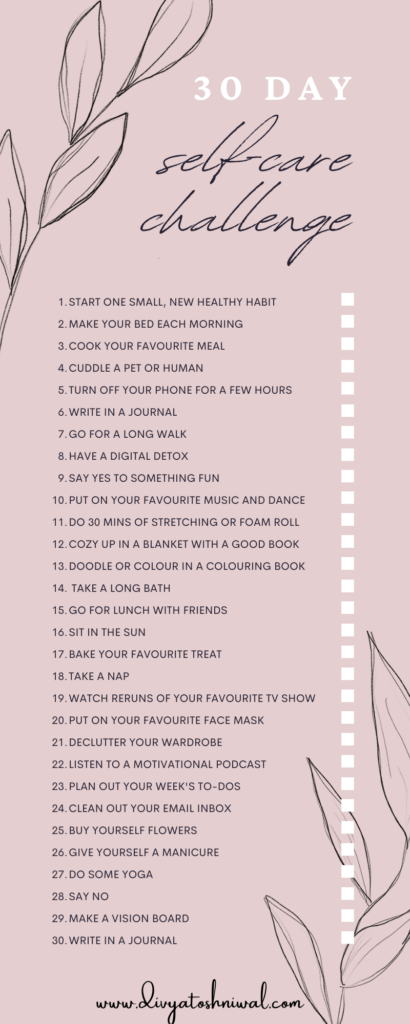
  • Self-Care Habits That Can Help To Fight Depression

What Is Depression?

Depression can mean something different for each individual and hence to define depression is not the right thing to do. As for the meaning of the word depression, Google says: “a feeling of unhappiness that lasts for a long time. Depression can be a medical condition and may have physical signs, for example being unable to sleep, etc.”

Different symptoms are reported in depression, all of which may not be present at all times for all people. But some symptoms would definitely be present. You can learn to identify the Symptoms of Depression.

What Is Self-Care?

To make yourself a priority. While in depression the worst thing we do is avoid our own well-being. We do not pay attention to our physical or mental health because our emotions are not in balance. The lack of energy and interest makes us avoid the most important thing in life- Ourselves. When I went into depression I realized I did all the stuff that I could for people around me. I smiled for other people in my life, I tried hiding my emotions, my true self. I did all the work that was needed to be done but after that, I had no energy left. I had no energy left for myself.

Later, a few things in my life made me realize the importance of me. I understood the importance of self-love and self-care. one of the greatest changes in my life was brought by dance and movement therapy. I took a Diploma course on Dance and movement therapy that helped me overcome my depression to a great extent.

I understood that taking care of yourself is not selfish, I understood that it’s ok to think about yourself, and I understood that I can take care of my loved ones only when I am alright. If I am weak, physically, mentally, or emotionally it will take a toll on all aspects of my life and the people associated with me. I researched more and read more about self-care and I understood that self-care is not expensive and is not a luxury that normal people cannot afford. We can practice self-care every day.

But while suffering through a depressive episode, the daily self-care is sometimes not enough. Daily self-care acts as a maintenance dose but right now you need to put some extra effort to help you deal with depression.

Read also: 8 Types Of Self Care That You Should Bring In Your Life

Self-Care Habits That Can Help To Fight Depression

When it comes to self-care for depression not everything and anything will work for you. The reason for depressive episodes can be varied and hence the way you can overcome your depression also might vary from another person whom you have seen coming out of depression. All I am saying is what worked for them might not work for you. Hence I am trying to list down a few options for self-care that help in overcoming depression and you can try them to understand what works for you the best.

  1. Develop an exercise routine. This is not an option. No matter what the reason of your depression is, you need to get up from the bed and move your body( unless you have a severe physical ailment) . There should be at least 30 – 40 minutes in your day where you do some form of physical activity and your heartbeat goes up. The choice of workout, however, is entirely your choice. For me , aerobics and dancing works the best. I also love to go out on walks in parks. Being close to nature is another thing that makes me happy.
  2. Continuing on my previous point of being close to nature, another aspect of self-care is also taking small little breaks from your monotonous life and going on small vacations also help to overcome depression.
  3. Practice Positive Affirmation. Create positive affirmations for yourself, anything that suits you and relates to your life. Repeating the positive affirmations would help you design an optimistic mindset. And here by optimistic mindset I don’t mean wishful thinking. It is just being able to accept the possibility of something very positive happening in your life. Mindset would make it reality.
  4. If the reason for your depression is loneliness and not having enough people around, then social self-care is something that becomes of utmost importance. It is not always the case that we are alone. Sometimes we shut everyone out so hard that we end up creating that loneliness for ourselves. So, the next time someone calls you, don’t avoid talking and reply to messages. The next time someone invites you for a meetup or a gathering say YES. Commit to one social meetup each week . If there is not invite from others then go ahead and invite someone on your own. For times when going out is not possible take help of video calls.
  5. If the reason for your depression is financial then start now to build some economic stability for yourself. It is never too late and the situation you are in can be changed. Nothing will change overnight but trust me when I say things will change. Learn how financial self-care is important and how you can build the economic stability you want.
  6. If the reason of your depression is not feeling loved enough or losing a romantic partner then PLEASE start loving yourself again. We often indulge in our relationships so much that we stop loving ourselves and that is what leads to being sad and lonely (whether you are in a relationship or broken apart). Love Yourself First. It is not being Selfish.
  7. Spend some time in knowing yourself better. One of the greatest ways to do that is through journaling. Get some journal prompts for self-awareness, get a journal, and depending on how creative you are, some stationery. Find some time every day to come closer to yourself. Do not edit or re-edit your words. Just write in a flow.
  8. Dedicate some time to developing your spiritual practice. The form may be anything that helps you . For me meditation and reading good books help the most. If you believe in energy healing or practice do that. If you believe in crystals then use their power . But by getting into such healing I don’t mean that go to a healer pay them a handsome amount and get healed . I would suggest , learn these things for yourself. Start with a book , get into a course and understand the very basic of healing yourself .
  9. Soothe all your five senses. Organize your space so that you live in a clutter-free home and office . The aesthetics of your home and office help a lot to reduce stress. What you look at the entire day is an essential part of your life. Listen to good music , it will help you relax better. Eat the food you love and soothe your taste buds . But do not forget to eat healthy too as what you eat becomes very important in dealing with depression. Massage your feet and hands. If need be go get a full body massage to relax and make you feel pampered and last but not the least your olfactory senses may help a great deal. That is why aroma therapy is getting so popular nowadays. Go get some good fragrances in form of a candle or diffuser and it will make you feel good.
  10. Practice mindfulness. Be in the present moment as much as you can. Thinking about the past and worrying about the future is going to contribute only to overthinking. Hence practice mindfulness exercises and help your mind stay in now and here.

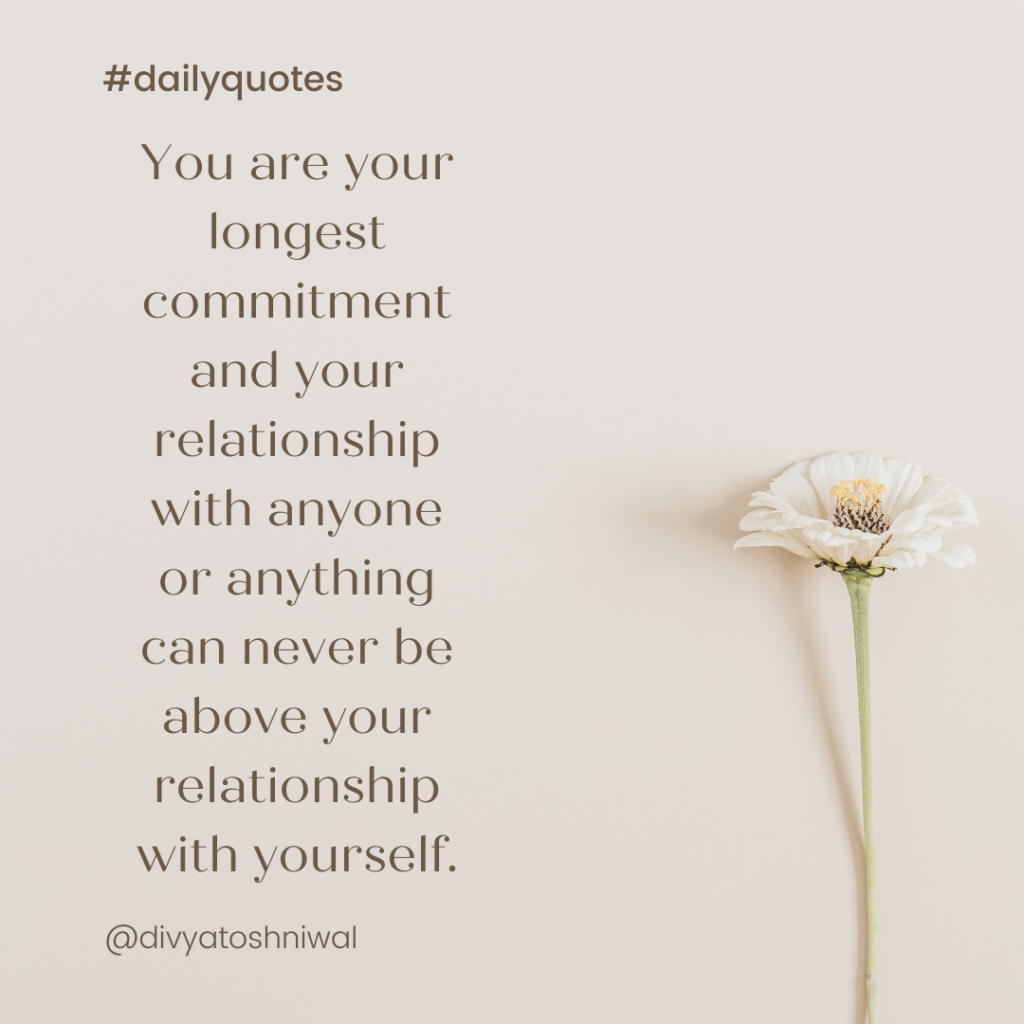
Ways to Self-care are many but the basic philosophy behind it is that you are your longest commitment and your relationship with anyone or anything can never be above your relationship with yourself.

Above all this, I would always suggest that there is no harm in asking for help. If you are feeling depressed and are not being able to handle things on your own then seek help from the people around you and if need be, seek professional help. You can connect with me here to book an online counseling session.

How Energy Vampires Affect You and How To Deal With Them | Divya Toshniwal |

Posted on September 24, 2021September 14, 2026 by Divya Toshniwal

Energy Vampires are people who suck up your energies to thrive or feel better about themselves. Before you understand how the energy vampires affect you or how you can deal with them, you first need to understand what are energy vampires and how to identify them.

Read Here : What Are Energy Vampires And How To Identify Them | Divya Toshniwal |

Energy vampires affect you on different levels and disturb various aspects of your life.

how energy vampires affect your life

Effects of Energy Vampires On Your Physical Body

  1. You feel tired and drained around them.
  2. You feel stressed
  3. You may feel headaches or body aches around them.
  4. If you allow yourself to be completely drained you may feel nausea or you may feel like puking.
  5. You may feel your body shaking or shivering
  6. You may feel sweaty.
  7. It may cause you to feel hungry even when you are full. (this may cause weight issues at later stages)

Effects of Energy Vampires on Your Emotions

  1. You feel upset without any particular reason for it.
  2. The negative people may create feelings of inferiority in you.
  3. They may create a belief that you are not good enough.
  4. They create drama in your life where you start believing that nothing is going right in your life.
  5. The angry energy vampires may make you feel helpless and weak.
  6. You may lose touch of you positive thoughts and start believing in the negative.

Effects of Energy Vampires On your Mental Health

  1. You may feel depressed and stressed all the time when you are around them.
  2. Some energy vampires have overbearing nature which may make you anxious.
  3. Constant contact with an energy vampire may create eating disorders as they make you feel hungry even when you are full.
  4. Energy Vampires may create a sense of self doubt and inefficiency in you , leading to inferiority complex.
9 ways to deal with energy vampires

Dealing With Energy Vampires

We have already seen how drastically these energy vampires can affect your life. So when you have successfully identified the energy vampires in your life you also have to now know how to deal with them in order to minimize their impact on your life.

1. The first step to dealing with negative people and energy vampires is the awareness and alertness that you can develop for them. Trust your instincts in such matters. Evaluate logically all the symptoms that the people around you show and observe keenly. It does not mean that doubt on every person you are with, but, if you feel low particularly around someone, become alert.

2. Increase your aura and positive energy. This is the next best thing you need to do. It is not even necessary to have an energy vampire around to take this step in life. Filling yourself with positive energy and increasing your aura can be rewarding in many ways. Start by spending more time with positive thoughts, books, channels, people, and you. Meditation can be a good way to find abundant positive energy.

3. Do not internalize everything any person says to you. No matter what the people around you say to you, make your belief in yourself unshakeable. Whenever you come across statements that put you down, be more logical about them and do not be burdened under emotions.

4. The next step is to limit your time with the energy vampires. If you believe that someone is taking up a lot of energy from your life and that you don’t want them to, you need to stop spending excessive time with them. The relations you have need not be broken if you know how to manage them. Be with them for only as much time as you can be ok with. It is ok to create distance between yourself and people who are not good for your progress.

5. When you are around energy vampires it’s better to turn around their energy. If they do not have much negative energy, they wouldn’t be affecting you much. A good way to go about that is by having conversations about things they love or are interested in. This will turn their energy around and help you deal with them better.

6. Sometimes it becomes tough to handle the energy vampires because you try to be the better person and help. You try to raise your energy and give them as much as you can and that may be a very noble task, but, it is damaging for you in the long run. It takes a lot of effort, years of training, and a great amount of self-awareness to do so. Do not indulge in the passion of giving until you are sure you can handle it well.

7. Keep your physical body healthy. Your energy body and physical body is connected and hence a weak physical body would make your energy levels weaker too. So while you are working on uplifting your positive energy also work on improving your physical health.

8. Take walks in nature alone. Allow nature to heal you, to ground you, whenever your body feels heavy with negative energy. Do some form of yoga or meditation along with it to boost the healing process.

9. Do things that you like. Self-care is an important aspect of dealing with energy vampires. Indulge into a hobby, pamper yourself, take breaks, read a good book, or do whatever uplifts your mood.

These pointers would help you deal with the energy vampires better the next time you are around them.

What Are Energy Vampires And How To Identify Them | Divya Toshniwal |

Posted on September 20, 2021September 14, 2026 by Divya Toshniwal

Vampires, not many would believe in their existence but the existence of energy vampires can be felt by each and every one of us. These people do not have extended canine teeth or a blood-thirsty look on their faces, but they exist. They exist between you and me, even when they do not look frightening and not easy to identify, they are walking amongst us and affecting our lives.

what are energy vampires and how to identify them ? by Divya Toshniwal

So what are energy vampires? and what are they looking for?

Energy Vampires are people who feed upon the energies of other people to refill their depleted energies. These are people surrounded with all negative emotions and when they are around you they make you feel negative and depleted too. They feed upon your positive energy to balance themselves. as water flows from a higher to a lower level so does energy. So if you have high and positive energy and a person with low and negative energy enters your energy space, the positive from you would try to negate the negative in them.

Think about this, if you are a very optimistic person who always sees the brightest sun and a friend you have always sees the cloud, wouldn’t you try to shine brighter and help them see the light? And this effort would take some part of your energy which even you need to refill at some point in time. But now imagine this happening without your conscious knowledge or your consent.

Energy vampires stay around you because they feel good when they are around you. Your positive energy keeps them in balance. The effect though is that you feel depleted, tired, exhausted, negative, and down.

Identifying Energy Vampires:

There are a few signs that may help you to identify the energy vampires in your life.

  1. These people are extremely negative in their approach. Nothing ever seems good enough for them . They would always complain and create arguments. They love to bring down the energies of other people to their level as it makes them uncomfortable when anyone progresses or holds higher energy around them.
  2. The people who are chronically depressed and sad all the time can also deplete your energy as you would want to help them get better all the time. These people are not overbearing as negative people but very subtly they would suck up your energy. At times you may feel you are making progress and they are getting better , but the fact is that this depressed sad state has become a comfort zone for them and they do not want to leave their comfort zone anymore. They are needy people who need your positive energy around to balance themselves and would make no effort to create their own positive auras.
  3. Some times identifying energy vampires can become very tricky as they may not mean to suck up your energy and might be just lost souls with a void in their hearts. When people are trying to fill a void in their life they may fill it with your energy as they are just searching for something better for themselves. They may become an energy vampire for temporary period but once the void is filled they are capable of creating their own energy and would no longer be an energy vampire. If your dealing with such people and want to help them , you should find some alternative ways to recharge yourselves before and after you meet them.
  4. Then there are people who are just looking for an adrenaline rush. Since they are not able to get that from their own lives , they create a stir in your life. To them the chaos creates and energy they want , but for you it becomes a cost to pay.
  5. Some energy vampires are more dangerous than others and the ones we are talking about next are certainly extremely dangerous. These are people who are filled with anger and would not hesitate to take it out on you. To protect yourself you would try to create a shield and these people feed on that shield. These are people who want to put you down and would go to any extent to do so. If you have any such person in your life , the only way to save yourself is cut off.
  6. Another kind of energy vampires are people who talk a lot. They may keep talking and talking and never let you speak. When you keep on listening to them you spend your energy for thing which may not be productive or infact may be counter productive. Unknowingly they may end up taking a lot of energy from you.

Read More: How Energy Vampires Affect You and How To Deal With Them.

Recent Posts

  • Adulting is Hard, Micro-Retirements are Your Sassiest Escape Hatch
  • Reclaim Your Time, Reclaim Your Peace: Setting Boundaries with a Graceful ‘No’
  • The Orange Peel Theory: The Berries That Sealed Our Love
  • (no title)
  • Mimetic Desire: Do you really want what you think you want?
© 2026 Divya Toshniwal | Powered by Minimalist Blog WordPress Theme